Relationships are complicated; even a relationship with one’s self.
There’s a battle taking place within me—between flesh and spirit, between what I feel and what I know. And when that struggle becomes too loud, I retreat.
I find myself caught in the quagmire between the Hermit and the Martyr—one urging me to withdraw, the other compelling me to endure. I disappear inward while carrying burdens I was never meant to carry — not alone.
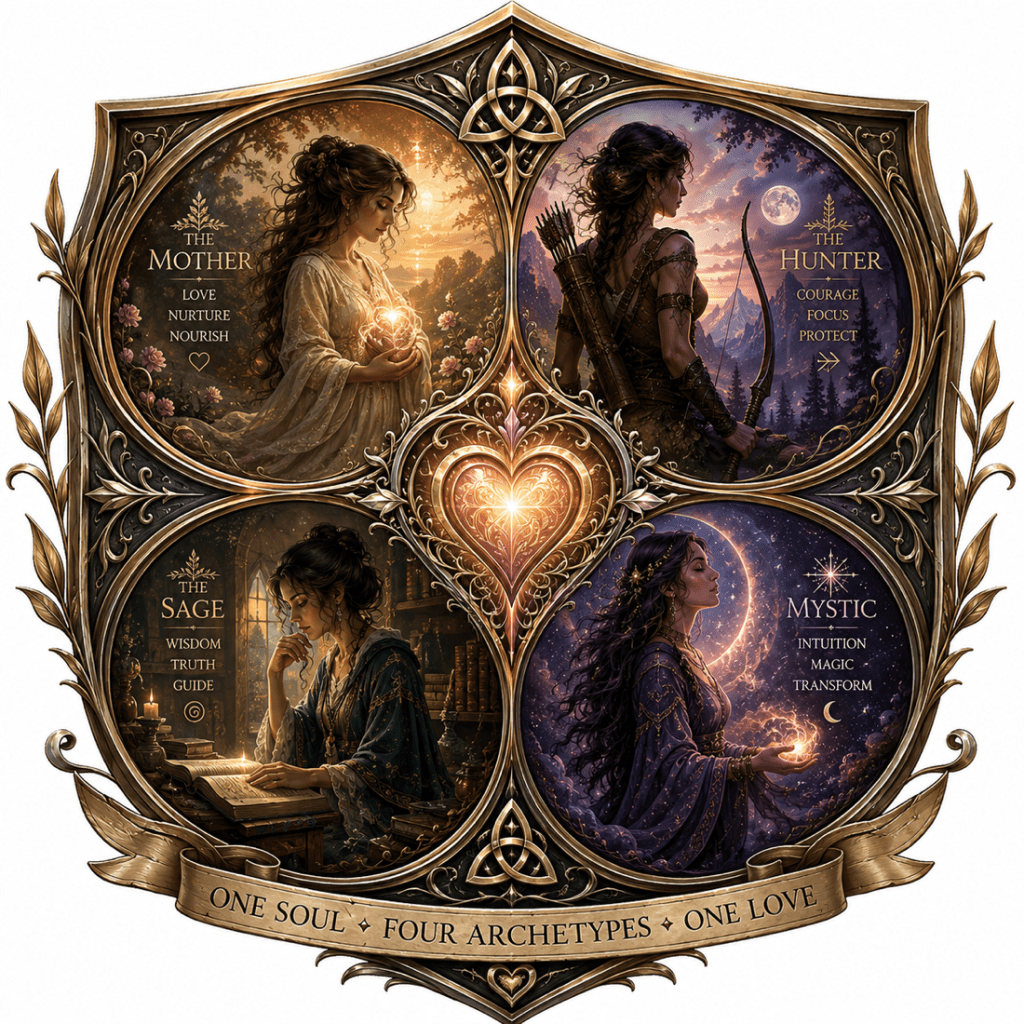
Yet beneath them both, I can still feel the other parts of me waiting: the Mother who nurtures, the Hunter who rises, the Sage who understands, and the Mystic who trusts what cannot always be seen.
Perhaps the battle is not about defeating one part of myself in favor of another. Perhaps it is about calling them all home—out of isolation, out of sacrifice, and back toward the heart.
Because somewhere beneath the struggle, love is still the center.
I don’t cry every day anymore, so that must be progress.
There was a time when your name could undo me before the sun had fully risen.
A time when every phone notification made my heart stumble, when every unfamiliar vehicle turning into the driveway made me look twice.
That doesn’t happen as often now.
Not because I miss you less.
But because a heart can only break in the exact same place so many times before it learns how to carry the crack.
It has been so long since I’ve heard your voice.
So long since I’ve felt your hug, seen your smile, or smelled the sunshine in your hair and the scent of an honest day’s work lingering in your clothes. Time has not erased those things.
If anything, it has sharpened them.
Your children are all another year older now.
So am I. So is everyone and everything.
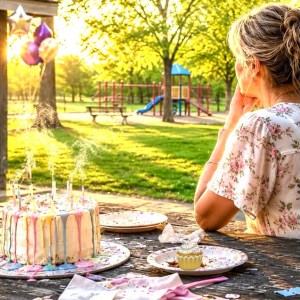
Birthdays have come and gone. Holidays have arrived and passed. Seasons have changed without asking anyone’s permission.
Time kept moving.
I hated that at first.
It felt disloyal to laugh. Disloyal to enjoy a meal. Disloyal to have a good day when there was still so many empty places at the table.
But life is stubborn.
It insists on continuing.
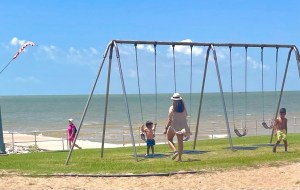
I see your wife’s picture from time to time–on social media. Her smile is still the one I remember from porch conversations and crowded kitchens. I see traces of the life that once intertwined so naturally with ours, and I wonder if she ever thinks about those days too.
The children are growing.
The family is changing.
The world keeps turning.
And I am learning that standing still will not bring you back into my life —our life.
I spent a long time living inside that stormy summer evening, replaying words, replaying mistakes, replaying every crossroads where things might have gone differently.
I searched for answers in places where answers no longer lived.
Grief is a hungry thing.
If you feed it, it begins to consume everything in its path and everyone around it.
I can’t let that happen.
Not anymore.
There are people here who still need me. Still need my strength. Still need my presence.
Still need me to be ok.
I need them to be okay. I need you to be okay.
So I will not lock myself away in regret and what if and so much sorrow.
I will not ask the rest of the family to live in the shadow of my heartbreak.
I will love. I will celebrate birthdays. I will make memories. I will laugh when something is funny. I will heal. I will forgive.
And so will you.
I will cry when I must.
And when thoughts of you come—and they always do—I will let them sit beside me for a while.
Not as an open wound.
Not as a punishment.
But as happiness … as love. And I’ll smile.
Because despite everything, that is what this has always been.
Love with nowhere to go.
Love that cannot call. Love that cannot visit. Love that cannot hold its grandchildren.
Love that waits.
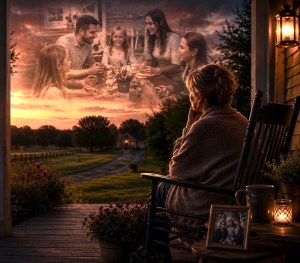
And though I no longer stand at the window or watching the road every day, some part of my heart still leaves the porch light on.
This piece for National Short Story Month was written with beginning writers in mind, but readers are welcomed. We’re all one great big happy family here. After all writers are readers too.
A lot of people don’t know that May is National Short Story Month.
Yep, you can thank Dan Wickett for that.
Don’t you just love bite-size fiction?
I did a live presentation some years back titled The Art of the Short Story. In preparing the notes for said exhibition I borrowed a large portion of material from a fellow author. She is a veracious source of information and her published works are impressive. For the presentation I also offered my own work as examples.
Word Count Matters.
Many of the contest that you may submit to are going to have a maximum amount of words allowable. Occasionally, you’re given even more of a challenge with a minimum as well as a maximum. Those were always fun for me because it stimulated more than just creativity.
Learn how to use ‘word count’ in whatever program you are using to write and check it frequently.
No Nonsense
Another benefit of writing short stories verses novels is you don’t have to fluff up the word count with what feels like senseless babbling to make sure you hit the mark.
Of course, sometime the story takes on a life of its own and it’s no longer a short story. Your creation may grow into a novella or a novel. Heck, it might even become epic! Imagine your story spawning generations of creative little sub stories …
At any rate, I think it’s best to let the story tell itself and you just breathe life into it. And always have fun with it.
But always keep word count in mind, especially when riding short stories. Be careful not to lose track by getting too attached or involved as I mentioned in an earlier post.
Writing Short Works Helps You Hone Your Writing Skills.
When every word counts, writers tighten their prose. They eliminate filler words, passive voice, weak writing, or tangential thoughts—pretty much anything that requires extra words. No um’s or uh’s or well’s. No “was walking” when “walked” suffices. No “walked slowly” when “strolled” captures the mood better. No drifting into a daydream that doesn’t advance the plot.
These things slip in when we write novels. And just think how strong your novels will be when you develop these stylistic choices and apply them to your longer works.
The Short Story Can Be Used to Introduce One of Your Longer Works.
Regardless of the theme of the anthology, you can write a companion piece to an existing novel or series. This can be an excellent marketing tool.
For example, say you have a paranormal romance series you’d like to promote, and you have an opportunity to contribute to a horror anthology. You could tailor your horror story so that it’s a prequel or sequel to the first book in your paranormal romance series. You might even choose to weave in a little romance so readers have a better understanding of what to expect in the series. As long as the story meets the requirements for the anthology, you’ll have a great introduction to your longer work placed in front of an already interested audience.
Sample the Buffet
The short story format allows you the opportunity to explore different genres without committing time to compose a longer work.
If you are new to writing and aren’t sure what genre you’re interested in, try them all. 
If you are seasoned, take the opportunity to try something completely different from what you normally write.
For example, a romance writer might choose to craft a futuristic sci-fi story.
What do you gain from that, you may ask. 
Well, not only do you get to flex your creative muscles, the change of scenery might recharge your batteries and give you a fresh perspective on the novel you’re working on.
Furthermore, you may just find another genre that you enjoy writing in and a new fan base should you decide to become a multi-genre author.
What? How? Where?
Okay, so you want to write a short story — try your hand at. You believe you have a fabulous idea, but you don’t know what to do.
If you are in school — high school, college or university, get active. Submit to as many competitions as possible.
Short stories are ideal for genre driven magazines, anthologies, digests, newsletters, co-ops, etc. 
Potential acceptance equals potential income and/or exposure.
There are literally thousands of genre magazines that accept submissions. If you have an agent great. If you don’t that’s okay, you can submit it yourself; that is if they accept direct submissions. Its easy enough to find those answers with a little research.
All Aboard!!
Short stories work well in creating a series. Think of each new release as an episode.
A series can be done on a weekly or monthly basis. This can be fun without being time consuming.
There are so many ways to get started but you’ve got to write it first – at least a draft and then (when you know the rules) make it fit. Now place a stamp on it or hit the send button and you’re on your way.
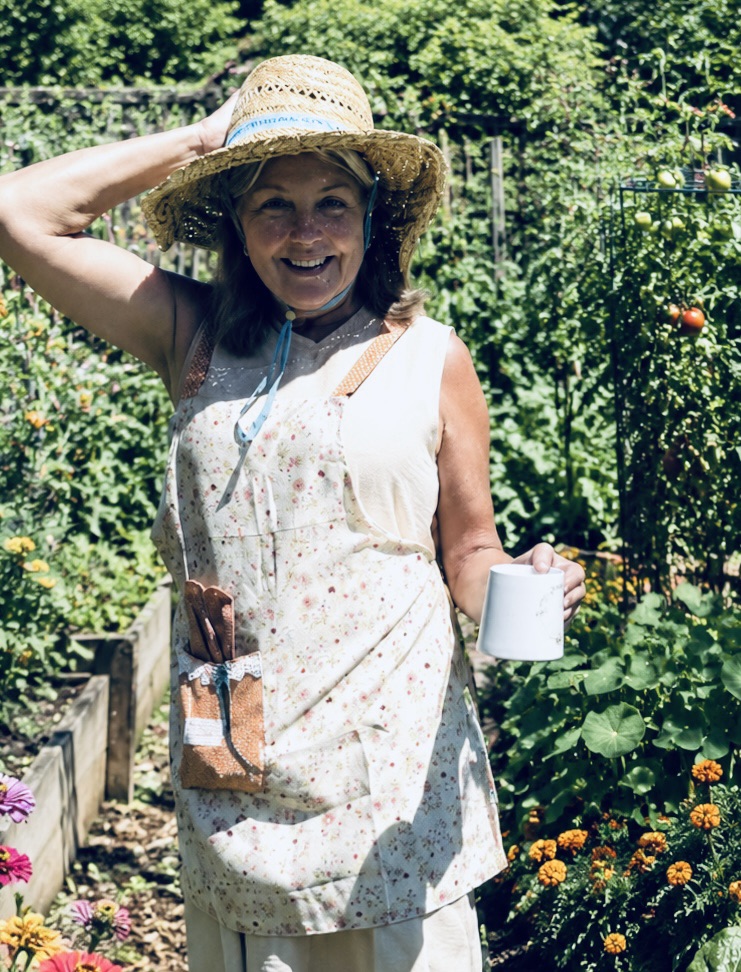
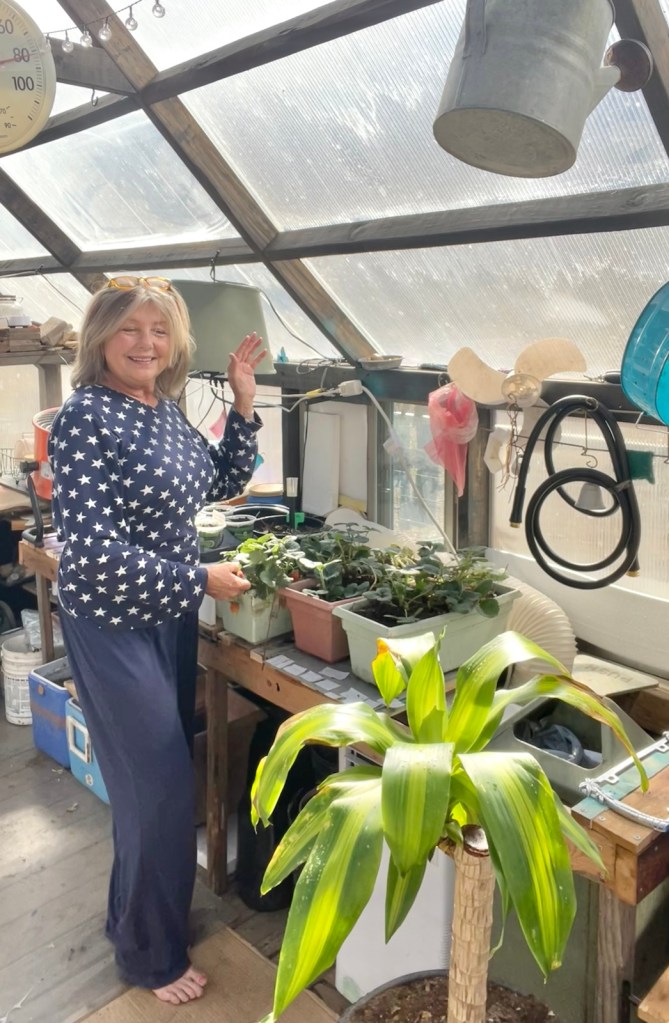
At this point, I don’t know if I’ve said too much or not enough [giggle] so I’ll do a quick little summary and get back in the garden.
How to Publish Short Stories
Pick a genre. Decide where you will submit, read the rules and regulations and write within those guidelines. ✅
Submit your piece once it is complete and polished.
Enter as many Short Story Contests as you can. Keep in mind you cannot send the same story to multiple publishers. In most cases you must wait for a letter of acceptance or rejection before you can send that same piece to another publisher.
Rub elbows with other authors, figuratively, of course. Collaborate on anthologies when possible.
Create and publish your own collection of short stories.
Do not pay to enter a short story contest.
Before you submit a piece, know whether you are being paid by the word or by the story/submission. 
Here’s wishing you all success!
Right on? Write on!
Posthumous Accolades (A Toast to Dan) 🥂
Dan succumbed to a heart condition in September. I hear he was a gentle, soft spoken man. Rest in eternal peace Dan Wickett, and thank you for giving us National Short Story Month. Daniel Earl Wickett, 1966-2025
I suggest further reading about Dan and what he’s done for the writing community in this article found at  Ann Arbor Chronicle
The thought of losing a child cripples me [emotionally]. Although I have thankfully not lost a child to war my mama heart hurts so deeply for those who have that is how this poem was born so many years ago.
That is why I share it here today.
But let me not forget – let none of us forget.
Memorial Day is more than a long weekend, a parade, or a flag waving in the warm breeze. For many families, it is a chair left empty. A voice that no longer answers. A folded flag resting where a son, daughter, husband, wife, father, or mother once stood.
Today, we remember those who took an oath beneath a flag of pride and came home draped beneath it.
This poem was written years ago, but like grief itself, its meaning never ages. It is for the mothers who still whisper lullabies into silence, for the families who carry pride and heartbreak in the same breath — the same trembling hands. And for every fallen service member who gave all they had —whose absence still echoes through the lives they left behind.
Little Man By Janna Hill
IT’S TIME TO GO TO bed little man Cover up your head little man I’ll see you when the sun breaks in the morn Say your prayers and close your eyes I’ve locked the monsters all outside She’d sang those words to him since he was born
He grew to be a brave young lad And followed after his ole dad Beneath a flag of pride his oath was sworn They brought him home in silk lined wood And all around him soldiers stood While Butterfield’s Lullaby played upon the horn
It’s time to go ahead little man I know that you weren’t scared little man My heart breaks I can’t see you and I mourn I’ve said my prayers for your closed eyes I’ve tucked my feelings deep inside She sang into a folded flag of thorns.
I’m not sure who I’m speaking to in the audience; whether they are a curious reader or an independent author, I will try to address the topic in a way that all can understand.
In the first portion of my annual Indie report I shared a few things I have learned regarding support, reviews and social media.
The burning question I have been asked most is, how much money do independent authors make per month?
When the question is asked, they are looking at independent authors as a whole. A problem arises there because independent authors are not a whole, they are… Independent.
I would not venture to offer an “average”, but I’m sure that you can find that information somewhere else.
How much money an independent author makes is going to depend on how many books they sell. The same is true of traditional publishing.
It also depends on the list price of the book(s) and the royalty percentage.  That can vary significantly.
How many books they sell may also depend on how many books they have published.
Even best sellers get forgotten. Just like in traditional publishing.
You need to have something to follow up with or — be a one-hit wonder.
Unless you have the next To Kill a Mockingbird…
I suppose it’s about time for the next Harper Lee.
Unless you are someone like Harper Lee, it’s advisable you have three stories ready to hit the market and working on the next one at the same time.
A potential buyer that goes to your sellers page is going to look at how many books the author has, and how well they’re doing. They’re also going to look at reviews.
If there is only one book or if there are no reviews, they may not be willing to take a chance on you/that author.
Sorry, but that’s the truth. If you’re a writer chances, are you are a reader also. Put yourself in the readers place. Ask yourself, “would I, as a reader, take a chance on me?”
It’s okay if you talk to yourself— I do it all the time. 
Use beta readers and a support system, etc. to generate some reviews on your releases.
Not fake reviews.
Not paid reviews. Please.
How many books you sell will depend on how good your book is and how much you promote it.
How will people know about this book?
Are you willing to spend money to make money? If so, how much?
But we will save that topic for another time. For now, let’s get back to the question of hand.
Regarding how much money do you/an independent author make.
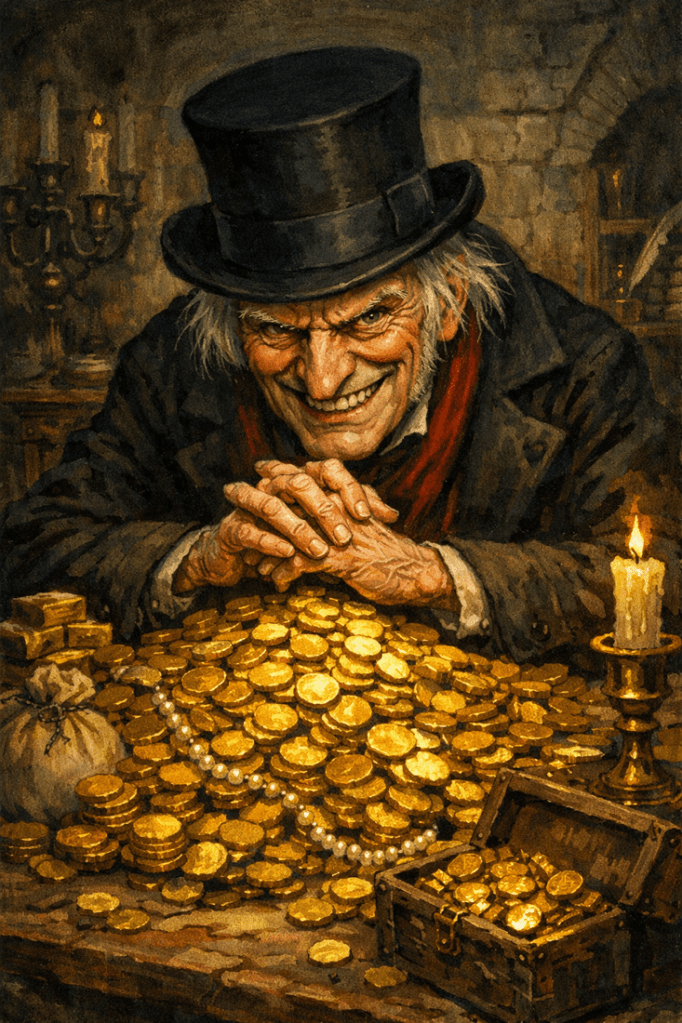
I have to giggle at this point and imagine a Scrooge-like character. I can see him/her with a wicked grin, anxiously rubbing their hands over a pile of shiny coins. And, of course they are counting dollar signs instead of sheep as they drift off to sleep.
Anywho. I digress.
What a person makes as an independent author can range from $0 a month to $4000 a month— or more.
Now $4000 a month is not the norm; it is rare and what I consider success.
4K sounds like a big deal — and it is.
$48,000 a year is a nice income and many people are able to live comfortably on that.
But most independent authors will not see that sort of success. So let that sink again.
There are many other fields that you could go in to if you’re only interested in making money.
And that’s completely understandable because living in our society requires that you have money.
Most independent authors have a full-time job, or at least a part-time job.
Were they already have the monetary means to write full-time.
So there’s that in a nutshell.
If you plan to write, then write because you love it— because you are driven to.
Try writing essays, short stories, small pieces to submit to magazines… anything to build your résumé. 
Right on? Write on!
Now go have a wonderful day.
P. S. April is National Poetry Month and I do plan to post some personal poetry this year.
I am not taking suggestions or submissions like in years past.
Why?
Because I am hip-deep in my own re-writing, re-creating and re-editing.
With that said, let me add a word of caution. Be careful about who you trust.