That is a question I have heard more than once and the answer is always yes. Yes indeed I have considered it but considering is a far cry from accomplishing.
I wrote a poem last year for my grandson when our fancy goldfish died because (as I explained to him) this sort of thing gets the creative juices flowing and writing can be very therapeutic.
I thought he would find it entertaining instead he cried and said “that’s not funny Nana and I don’t feel better.” Oops, my bad.
This same grandson loves the Skippyjon books by Judith Schachner so when he had finished mourning the goldfish he asked, “Can you write something like Skippyjon Jones and make him be a pirate?” I of course wanted to rectify the damage I had done so I quickly penned him another little poem.
In the house where he lived void of laughter and kisses
In the room where he smoked and the little dog pisses
Where the ghost of a bloke stirs a foul reminiscence
Lies the frame of a maimed Skippy Red
…
Go down, go down poor Skippy Red
Alas, alas no water to tread
No ropes, no planks, no breaking of bread
In your world of endless abysses
…
Go on, go on let sleeping dogs lie
A new crib for you, twas a good day to die
Hoist a fresh cup, here’s spit in your eye
Abaddon is better off dead
…
Farewell, farewell Skippy Red
Well… Dang it!! I struck out again! Being scolded by a seven year old for saying piss is a shameful experience but at least he didn’t cry.
I wanted to impress him with my literary accomplishments be a good grandmother so I scribbled a few more verses. Judging from the look on his face each one was worse than the one before so after a few hours I untied him. He rubbed his little wrists, shook his head and walked away. At that point I had to be honest with myself and admit …
April 30th is the last day of National Poetry Month and a fitting time to share Sara Teasdale’s I love You wouldn’t you agree? Sara Teasdale is said to be the first to receive the Pulitzer Prize Award for Poetry. She is known for her simplicity and (like too many others) her self-inflicted demise.
Yoo-hoo. It is still National Poetry Month and today I am highlighting Shel Silverstein.
I rarely think of Mr. Silverstein without remembering Johnny Cash and that delightfully ridiculous song A Boy Named Sue.
He (Silverstein) wrote a lot of nonsensical poetry/lyrics but like all humans he was multifaceted. His writing ranged from silly to somber with something for everyone as evident in the introduction to Where the Sidewalk Ends as he seems to say “welcome all.”
If you are a dreamer, come in,
If you are a dreamer, a wisher, a liar,
A hope-er, a pray-er, a magic bean buyer…
If you are a pretender, come sit by my fire
For we have some flax-golden tales to spin.
Come in!
Come in!
And we did. We opened the pages and entered the world he created and we returned again and again for the flax-golden tales that never grow old all the while wondering if he found that place Where the Sidewalk Ends…
There is a place where the sidewalk ends
And before the street begins,
And there the grass grows soft and white,
And there the sun burns crimson bright,
And there the moon-bird rests from his flight
To cool in the peppermint wind.
Let us leave this place where the smoke blows black
And the dark street winds and bends.
Past the pits where the asphalt flowers grow
We shall walk with a walk that is measured and slow,
And watch where the chalk-white arrows go
To the place where the sidewalk ends.
Yes we’ll walk with a walk that is measured and slow,
And we’ll go where the chalk-white arrows go,
For the children, they mark, and the children, they know
What I love about this poem is how easily it flows. You don’t have to be a Mississippian, a historian, a scholar or even a poetry fan to appreciate the smooth and simple beauty of Pilgrimage.
Sometimes we get so busy with the day to day ritual that we forget to read and that is a shame. It is also another reason to appreciate National Poetry Month. It serves as a reminder (at least for me) to seek out new poetry, to step away from the keyboard and open a book or a webpage or an audio device and go along for the ride if only for a few moments. This was certainly a ride worth taking.
Just in case I missed telling one person in the far reaches of Idonwannaherit (which is my husband’s country of origin) April is National Poetry month.
And guess what?! I was informed this morning that I have been nominated for the Pulitzer Prize Award. I’m thinking OMG! Am I so special they called me early? Turns out it was an April Fool’s joke. Damn you cruel jokester and may the winning of Publishers Clearing House Sweepstakes forever be just out of your reach.
With the fool’s business out of the way I’d like to talk about Plath.
Not because of her life’s work. In all honesty it is/was her chronic obsession with death that compels me.
In reading Lady Lazarus with or without knowing Plath’s history I could have imagined a poet scribbling thoughts that were just that- thoughts.
But the [reportedly] last two pieces she wrote and the two small children she left behind. I became strangely fanatical.
photo by Rollie McKenna
I tried hard not to judge her as a person and to focus only on the writing but I fell short. History, rumor and suspicion clouded my judgment.
In Balloons all I could see was her surveying her child at play – a child she would [knowingly?] soon leave motherless.
And in Edge… it would have been eerily sufficient without knowing Sylvia Plath Hughes had made for herself a gas chamber.
In doing so she had eliminated the need for an executioner so I became her judge, juror and examiner.
It wasn’t enough for me to obsess over the tragedy I insisted my husband partake of the mind numbing fixation.
His first response was, “You know I don’t read poetry. I don’t read anything that doesn’t have live game, a stock symbol or a machining program written on it.”
To that I handed him a beer and smiled, “Okay. I’ll read it to you and you tell me what you think.”
He agreed, though once I finished reading Edge aloud he held out his hand and ordered me to give it to him.
I graciously obliged.
Here it is in its entirety. Our discussion will follow.
Edge by Sylvia Plath 1963
The woman is perfected.
Her dead
Body wears the smile of accomplishment,
The illusion of a Greek necessity
Flows in the scrolls of her toga,
Her bare
Feet seem to be saying:
We have come so far, it is over.
Each dead child coiled, a white serpent,
One at each little
Pitcher of milk, now empty.
She has folded
Them back into her body as petals
Of a rose close when the garden
Stiffens and odors bleed
From the sweet, deep throats of the night flower.
The moon has nothing to be sad about,
Staring from her hood of bone.
She is used to this sort of thing.
Her blacks crackle and drag.
When he finally looked up I asked, “So what do you think?”
He took a long drink and shrugged, “She obviously wanted to be dead and she’s happy about it.”
“Yes, yes. Go on.” I urged, “What about the scrolls of her toga?”
“Sounds like the Clinton – Lewinsky thing. You know with the stained dress.”
I laughed and he continued. “Here where she says ‘it is over’ means just that – she’s finished.”
“What about the lines ‘each dead child coiled, a white serpent, one at each little pitcher of milk, now empty’ what do you think about that?”
“The Exodus? It sounds like the first Passover and the last plague in Egypt to me.” He looked back at the page in front of him and read,
“She has folded them back into her body as petals of a rose close when the garden stiffens and odors bleed from the sweet, deep throats of the night flower.”
He shook his head and returned the poem, “Did she plan to kill the kids and take them with her? I guess it doesn’t matter- It was fifty years ago, she was mentally ill and she’s glad she’s dead.”
“What about ‘the moon has nothing to be sad about, staring from her hood of bone. She is used to this sort of thing. Her blacks crackle and drag’ – what are your thoughts on that?” I asked, watching as he became more uncomfortable.
“It sounds like craziness. She was obviously mentally ill. Did you say she stuck her head in an oven?”
I nodded.
“Was it butane or natural gas?”
“I have no idea. Why would that matter?”
“Well one falls and the other rises – natural gas rises. Did she live in town or in the country? If she lived in town it was probably natural gas.”
“She lived in London, a town residence once occupied by Yeats.”
“Hell, it might have been coal fuel.” He paused as if it took added effort to ask the next question. “Did she kill her kids too?”
“No.” I answered.
His face relaxed a bit until I added, “The youngest, a boy named Nicholas hung himself in 2009. The daughter who was less than three years old when it happened went on to become a painter and poet.”
“Dammit! How’s the girl doing?”
“I don’t personally know her but she was still alive the last I heard.”
“Poor thing. Damaged people leave a lot of garbage in their wake. Hopefully she’s not too messed up.”
With that he bent and twisted the empty can indicating the discussion was over.
I mumbled a thank you, delighted I had snagged him into reading a poem yet a little ashamed that I had disturbed him with the past of Sylvia Plath.
Next week maybe I will entice him with a new poet, a living poet.
I will probably [silently] take a closer look at the works of Ted and Frieda Hughes, dissecting their psyches and torturing myself in the aftermath of Sylvia Plath.
Be it good, bad or indifferent I suppose I will always be a poet at heart.
One might think “real” writing (you know things like novels, short stories and blogs) would dissuade poetic tendencies but it doesn’t… and it shouldn’t.
Someone once said of poetry, “I honestly don’t know why it flies through my head but it’s like an energy that must be loosed and the only way I know to let it go is to jot it down.” Okay that someone was me but we’ve already established that authors and poets are insane a peculiar lot. At least that’s what I keep hearing from the voices living outside of my head.
Admittedly I tend to write disturbing prose. Why? I have no freaking idea other than the above explanation and this one just flew in.
Resident of Insanity
He gnashed and smashed his teeth to bits
Hissing shards of peppermint
On face and lace chipped molars lit
While gums and tongue did chide
~
The air like mud was thick with scent
Red with dread and white with grit
Dentin mixed with blood and spit
Where insanity did reside
~
He snatched and scratched at lights not lit
Held cries in eyes seen through slits
Pleading, “Someone give a shit
And plump this crumpled pride”
~
But none could hear his broken mouth
Or see the lights had all gone out
With hand on heart he faced the south
And they say that’s where he died
*Here’s this year’s first reminder that April is National Poetry Month so you have plenty of time to be thinking about it. Whether you read my poetry or that of someone else plan on expanding your horizons.
P.S. My works are not always of such unsettling nature. They’re worse when I’m happy 😉
I have never loved winter. The truth is I have hated her most of my life, I say her because she feels like a cold b*tch. Sorry warm fuzzy lady friends but winter to me has been a bitter woman with a barren womb… a frustrated old spinster that has never shared an orgasm. She is an ugly gray witch with a huge wart on the end of her nose, or maybe it’s a mole…
Today however I have decided not to hate her. I actually made the decision yesterday but just now got around to sharing my ‘come to meeting’ with Mother Nature. You see we have been experiencing some warm sunny days in this part of Texas, warm enough to spark a storm (lord forgive me I do love a storm) and it was that very tempest that let me see the heart of winter.
I honestly didn’t know who this man was (I’m sheltered like that) until Sara’s post exposed him here on WordPress. No, I do not live in a cave though I have often wished I did.
The thing that moved me other than his world renown photography is that Steve McCurry’s Simple Act of Waiting told in pictures is [chillingly] what I imagined when I wrote Waiting. I seriously got goosebumps.
If you’re like me (sheltered and horrible with names) or you are lucky enough to live in a cave, that doesn’t matter – I know you will recognize his photos when you see them. Who could forget the eyes of the Afghan girl starring out from the cover of National Geographic? Who would want to?
Waiting
For hopes that hung on a chicken bones
For hearts that lived in chains
For pods of green that died unknown
While waiting for the rain
For dreams left bare on empty prayer
For souls that wished in vain
For tears unshared in mute despair
While waiting for a change
For you and I and all mankind
For worlds where peace was slain
For faith and mind no man can bind
We wait and wait again


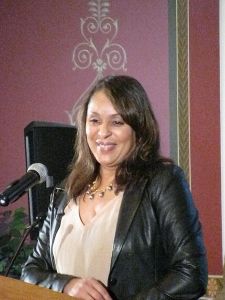


 The Real Janna Hill in